
Colour, Grit and Surface Finish: How Subtle Differences Change Slip Ratings (AS 4586:2013)
Test each colour and finish for accurate classification
Slip resistance is influenced by microtexture, glaze chemistry, pigment, and grit. Even tiles or coatings that look identical can produce different P-classifications under AS 4586:2013. Colour shifts, finish changes (gloss vs matt), granule distribution, and manufacturing variation all affect how a surface interacts with the pendulum slider. As a result, each finish within a product line should be tested separately.
Why Colour and Grit Change Slip Resistance
Slip resistance is often assumed to be a function of visible texture: if a tile or coating looks rough, it must be safe; if it looks smooth, it might be slippery. But appearances are deceptive. The wet pendulum test measures microscopic surface roughness—microtexture—not visual texture.
This microtexture is shaped by numerous factors, including glaze application, curing temperature, pigment load, surface finishing, granule type, and distribution of grit. Because these elements vary naturally between colourways and production runs, a surface that tests P4 in one finish may test P2 in another, even within the same range.
Manufacturers, distributors, builders and certifiers all rely on accurate slip resistance classification to ensure surfaces meet NCC expectations referenced through HB 198:2014. Understanding how colour and grit influence results is essential for selecting safe and compliant surfaces.
The Physics Behind Slip Resistance
Slip resistance is fundamentally a measure of friction—the interaction between the slider rubber and the surface under wet conditions. The Portable Skid Resistance Tester replicates the heel strike of a person walking on a wet floor.
The rubber slider engages with micro-peaks on the surface. The more prominent those peaks, the higher the friction. If the microtexture is smoothed by glaze, pigment, polishing, or contamination, the BPN value drops.
This makes slip resistance a material science variable, not simply a design choice.
How Colour Affects Microtexture and Slip Resistance
Colour is not a decorative afterthought. Pigment influences glaze chemistry, heat absorption, curing rate and surface hardness during manufacturing. These technical factors directly affect microtexture.
- Darker Colours Absorb More Heat During Firing
Dark glazes, such as charcoal, black and navy, absorb more heat. This can cause:
- slightly smoother glaze flow
- more complete filling of microtexture
- harder surface curing
- sharper levelling of glaze
All reduce the number of friction-providing peaks.
Result: darker colours often test lower under AS 4586:2013.
- Lighter Colours Trap and Stabilise Microtexture
Light glazes cool more quickly and solidify without fully filling the underlying microtexture.
Result: lighter colours often test higher, particularly matt versions.
- Pigment Load Alters Surface Roughness
High pigment content can change glaze viscosity. Even a small shift in formulation influences:
- surface roughness
- melt pattern
- thickness of the glassy layer
A slight change in viscosity can shift friction performance enough to move a tile from P4 to P3.
- Metallic or Reflective Pigments Reduce Friction
Reflective particles flatten or align during the firing process. The resulting surface behaves closer to a polished finish—even when marketed as “matt.”
How Grit Affects Slip Resistance
Grit refers to surface granules or embedded aggregate used to create traction. It appears in anti-slip coatings, textured tiles, vinyl planks, resin floors and safety finishes.
- Grit Size (Particle Size)
The coarseness of the granule affects friction.
- Fine grit may not protrude enough to engage the slider.
- Medium grit provides predictable traction.
- Coarse grit gives high friction but may break down faster under abrasion.
Even small manufacturing differences in grit size distribution produce measurable classification differences.
- Grit Density
How many granules per square centimetre?
Higher density = more traction.
Lower density = more slipperiness.
Uneven distribution is a common cause of inconsistent AS 4586:2013 results, particularly as most grit in-situ applications are a manual process when installed.
- Grit Exposure
In resin coatings, grit must protrude. If it becomes partially buried during curing or sealer application, friction reduces.
- Grit Composition
Common materials include:
- aluminium oxide
- quartz
- silica
- polymer beads
- carbide blends
Each has different hardness, wear characteristics, and friction performance.
- Grit Wear Over Time
Industrial coatings with grit lose slip resistance as granules:
- break down
- wear smooth
- become embedded
- detach
- get buried under coatings or contaminants
A surface may start at P5 and degrade steadily.
Gloss, Matt and Textured Finishes: Why They Perform Differently
Even without colour changes, finish type significantly alters slip resistance.
- Gloss Finishes
Gloss finishes often produce low P-ratings due to:
- smooth glaze
- reduced microtexture
- strong reflective surfaces
- sealer-like behaviour
Gloss tiles commonly fall between P1 and P2.
- Matt Finishes
Matt surfaces retain more microtexture and often test P3–P4, depending on glaze and colour.
- Textured Surfaces
Textures created through embossing, pressing or moulding generate friction.
These surfaces may reach P4–P5, but cleaning becomes critical. Dirt quickly fills the valleys and reduces effectiveness.
Manufacturing Variation: The Hidden Cause of Slip Resistance Differences
Manufacturing variation affects every product line:
- Kiln Temperature Fluctuations
Different areas of the kiln produce slight texture differences.
- Glaze Application Thickness
Automatic glaze lines still produce variation.
Thin glaze = more microtexture
Thick glaze = lower slip resistance
- Clay Body Differences
Changes in clay moisture, density or shrinkage alter surface performance.
- Production Run Differences
Two batches fired six months apart can test differently.
This is why AS 4586:2013 results from a single sample rarely represent an entire range.
Coatings and Sealers: How They Change Slip Resistance
When surfaces are sealed or coated (common in stone, concrete, and some tiles), friction changes unpredictably.
Most sealers LOWER slip resistance
Acrylic and solvent-based sealers generally create a smoother surface.
Anti-slip coatings INCREASE slip resistance
These include grit-in-resin formulations.
Penetrating sealers vary
Some preserve texture; others fill pores.
Post-installation treatments must be retested
Manufacturers cannot rely on pre-treatment AS 4586:2013 results once coatings are applied.
Real-World Testing Examples
Example 1: Colour Variation
- Product: Porcelain tile
- Light matt: P4
- Dark polished: P2
Example 2: Grit Density Variation
- Coating batch A: P5
- Coating batch B: P3
Example 3: Wear-Driven Change
- Kitchen flooring: installed at P5
- 12 months later: P3 through wear of grit
The differences were not visible—but they were measurable.
How AS 4586:2013 Testing Should Be Structured for Product Lines
Accurate classification requires testing:
- each colour
- each finish
- each texture
- each grit type
- each coating variant
- each batch if materials or processes change
This ensures the P-rating represents the specific product supplied.
How to Select the Correct Finish for Compliance
Colour and texture should be chosen based on measurable performance, not aesthetics.
Best practice:
- Choose matt over gloss for wet areas
- Use lighter colours when slip resistance is critical
- Avoid polished finishes in moisture-exposed zones
- Use grit-enhanced coatings for P5 environments
- Always test samples before final specification
Test each colour and finish for accurate classification
Zerofal provides AS 4586:2013 testing for product lines, coatings and multi-finish ranges.
Explore more
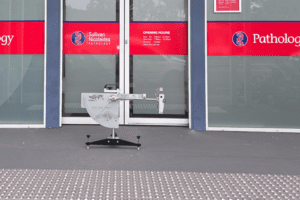
The Five Moments You Should Always Re-Test a Floor
Learn the five moments when re-testing slip resistance matters most — and how timing reduces risk more effectively than routine checks.
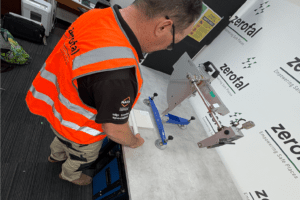
When Should a Product Be Re-Tested? The Question Manufacturers Get Wrong
Learn when flooring products should be re-tested for slip resistance and why one result rarely covers a full product range.
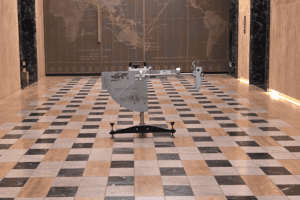
Why January Is When Latent Slip Risk Shows Up in Commercial Buildings
January maintenance and reopening cycles can increase slip risk. Learn why early-year verification matters for commercial buildings.