
The Five Moments You Should Always Re-Test a Floor
Slip testing is most effective when it follows change, not just a schedule.
Certain moments reliably increase slip risk — after resealing, cleaning changes, high traffic periods, near misses or refurbishment. Re-testing at these points helps confirm performance before assumptions turn into incidents.
Slip testing is most effective when tied to change, not calendar dates alone.
Certain moments reliably increase risk. These are the points where re-testing matters most.
The Five Moments
- After resealing, polishing or coating
Any surface treatment alters friction. - After a change in cleaning products or methods
Chemistry matters more than most people realise. - After a near miss, complaint or incident
Early signals should never be ignored. - After periods of unusually high traffic
Wear is rarely uniform. - Before reopening a refurbished space
Assumptions are weakest at handover.
Why Timing Matters
Testing at the right moment:
- prevents incidents
- improves documentation
- reduces reactive testing
- supports defensible decision-making
Make Testing Strategic
Testing is not about frequency.
It is about relevance.
Has something changed since the floor was last tested?
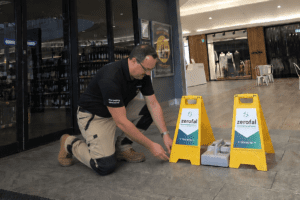
Slip resistance can shift after maintenance, cleaning changes or increased wear. Zerofal provides slip resistance testing for existing pedestrian surfaces, helping confirm performance at the moments when risk is most likely to change.
If you’re unsure whether re-testing is needed, it’s usually better to check before a problem emerges.
Explore more

Why Testing Before Installation Saves Thousands
Laboratory testing to AS 4586:2013 confirms P and D classifications before installation. Early certification protects project timelines and prevents expensive remediation.

Councils & Wet Weather Liability: Managing Public Interface Risk Before Winter
Public footpaths, ramps and civic facilities face increased exposure in wet weather. Structured testing to AS 4663:2013 strengthens municipal risk management and defensibility.

Winter Is Coming: Why Slip Risk Spikes Before You Notice
Moisture, condensation and increased cleaning cycles elevate slip risk in winter. Testing existing floors to AS 4663:2013 before peak wet conditions confirms compliance and reduces seasonal exposure.