
Why does slip risk increase in winter?

Winter exposes surfaces that may perform adequately when dry but become slippery when wet, contaminated or slow to dry. Testing confirms real performance.
Can painted surfaces become more slippery when wet?

Painted walkways, crossings, accessible bays and line markings can become more slippery when wet. Testing under AS 4663:2013 confirms how the surface performs in real conditions.
Car Parks: The Overlooked Slip Risk in Commercial Properties

Undercover and external car parks are increasingly becoming high-risk pedestrian environments due to worn coatings, contamination, moisture and reduced cleaning attention. Learn how slip resistance testing under AS 4663:2013 helps identify hidden risk before incidents occur.
How Much Does Slip Resistance Lab Testing Cost?
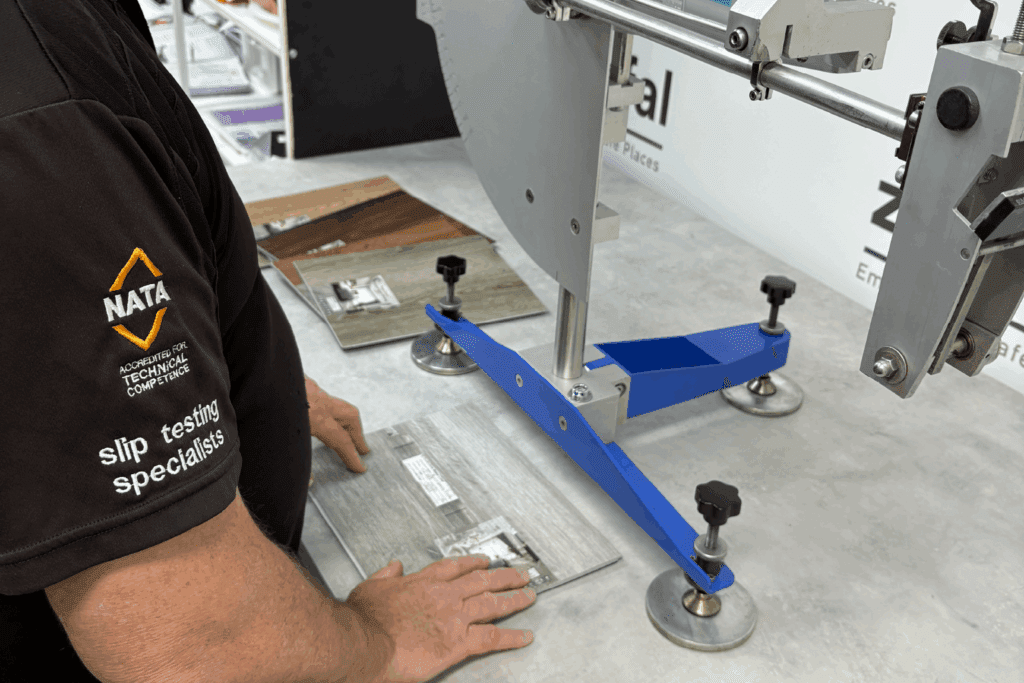
Slip resistance testing costs depend on surface type, number of samples, and method (wet pendulum or dry friction). This guide explains typical AS 4586 lab pricing, what’s included in a Zerofal test report, and how accurate certification protects your project from compliance risk.
Is Your Sample Ready? Prep Checklist

Accurate slip resistance results start before the test begins. This guide outlines how to prepare your samples for AS 4586 testing – covering size, cleaning, curing, and packaging – to ensure reliable, certifiable results the first time.
Local Gov: Public Paths, Parks & Liability

Public spaces are high-risk environments for slips, trips, and falls. This article explains how councils can use AS 4586 and AS 4663 testing to manage liability across parks, paths, and public facilities – protecting both people and budgets through data-driven maintenance and compliance.
Risk by Design: Why Post-Install Testing Matters More Than Pre-Check

Lab results don’t guarantee real-world safety. AS 4663–2013 testing confirms slip resistance of installed floors under actual use conditions.