Most slip incidents don’t happen because someone chose the wrong floor.
They happen because the floor changed.
Slip resistance is not a fixed attribute. It is a performance characteristic that shifts over time, often without leaving visible clues. A surface that once met requirements can quietly drift out of tolerance as conditions change around it.
This is where many organisations get caught out. Compliance is assumed to be permanent, when in reality it is conditional.
Slip Risk Is Dynamic, Not Static
Slip resistance depends on the interaction between:
- surface texture (micro and macro)
- contamination
- footwear
- cleaning chemistry
- wear patterns
- moisture
Change any one of these and the performance of the floor changes. Change several — as often happens over a year — and the risk profile may be completely different from when the surface was last assessed.
The Most Common Drivers of Change
Cleaning chemistry
Neutral detergents, degreasers, sanitisers and disinfectants all interact differently with surface texture. Repeated use can smooth microtexture or leave residues that reduce friction under wet conditions.
Deep cleaning and strip-and-seal cycles
Seasonal or annual maintenance programs often alter surface performance more than daily wear. Sealers, polishes and finishes can significantly reduce wet slip resistance even when applied correctly.
Foot traffic and wear patterns
High-traffic zones wear unevenly. Entrances, vehicle turning points, queues and transition areas degrade faster than surrounding surfaces, creating localised risk.
Moisture exposure
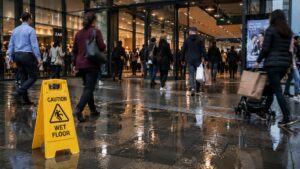
Rain events, humidity, condensation and mopping practices change how a surface behaves underfoot. Floors that perform adequately when dry may fail once routinely exposed to moisture.
Time itself
Certification reflects performance at a point in time. It does not account for what happens after the building opens, the cleaners change, or the weather shifts.
Why Visual Checks Fail
Visual inspection cannot detect:
- loss of microtexture
- chemical smoothing
- residue build-up
- friction loss under wet conditions
Some of the most hazardous surfaces still look clean, intact and well maintained. This creates false confidence and delayed intervention.
The Compliance Gap
Australian Standards recognise this issue by separating:
- testing of new surfaces before installation, and
- testing of existing surfaces in real-world conditions
But many duty holders treat testing as a one-off event rather than an ongoing control. That gap is where incidents occur.
Managing Risk Over Time
Effective slip risk management focuses on:
- understanding what has changed
- testing after meaningful change
- documenting performance trends
- intervening before an incident, not after
The question is rarely “was this floor ever compliant?”
It is “does it still perform safely today?”